
Index of Topics
- 01What Is Soft Wash Roof Cleaning?
- 02Why Oklahoma City Roofs Get Dirty So Fast
- 03Soft Wash vs. Pressure Washing
- 04What Does Roof Cleaning Cost in Oklahoma City?
- 05How Often Should You Clean Your Roof?
- 065 Signs Your OKC Roof Needs Professional Cleaning
- 07The Soft Wash Roof Cleaning Process
- 08Choosing a Roof Cleaning Company in Oklahoma City
- 09Protect Your Investment
- 10Frequently Asked Questions
Your roof takes a beating from Oklahoma’s wild weather. From spring storms to summer heat, fall leaves to winter ice, it’s constantly under assault. And let’s be honest – a dirty, stained roof makes your entire home look neglected, no matter how well you maintain everything else.
If you’ve noticed black streaks, green moss, or just a general dingy appearance on your roof, you’re not alone. Most Oklahoma City homeowners deal with roof staining, and many make the mistake of trying to pressure wash it away. But here’s the thing: pressure washing your roof can cause thousands of dollars in damage.
That’s where soft wash roof cleaning comes in. It’s the safe, effective way to restore your roof’s appearance without risking damage to your shingles or voiding your warranty. Let’s dive into everything you need to know about soft washing your roof in OKC.
What Is Soft Wash Roof Cleaning?
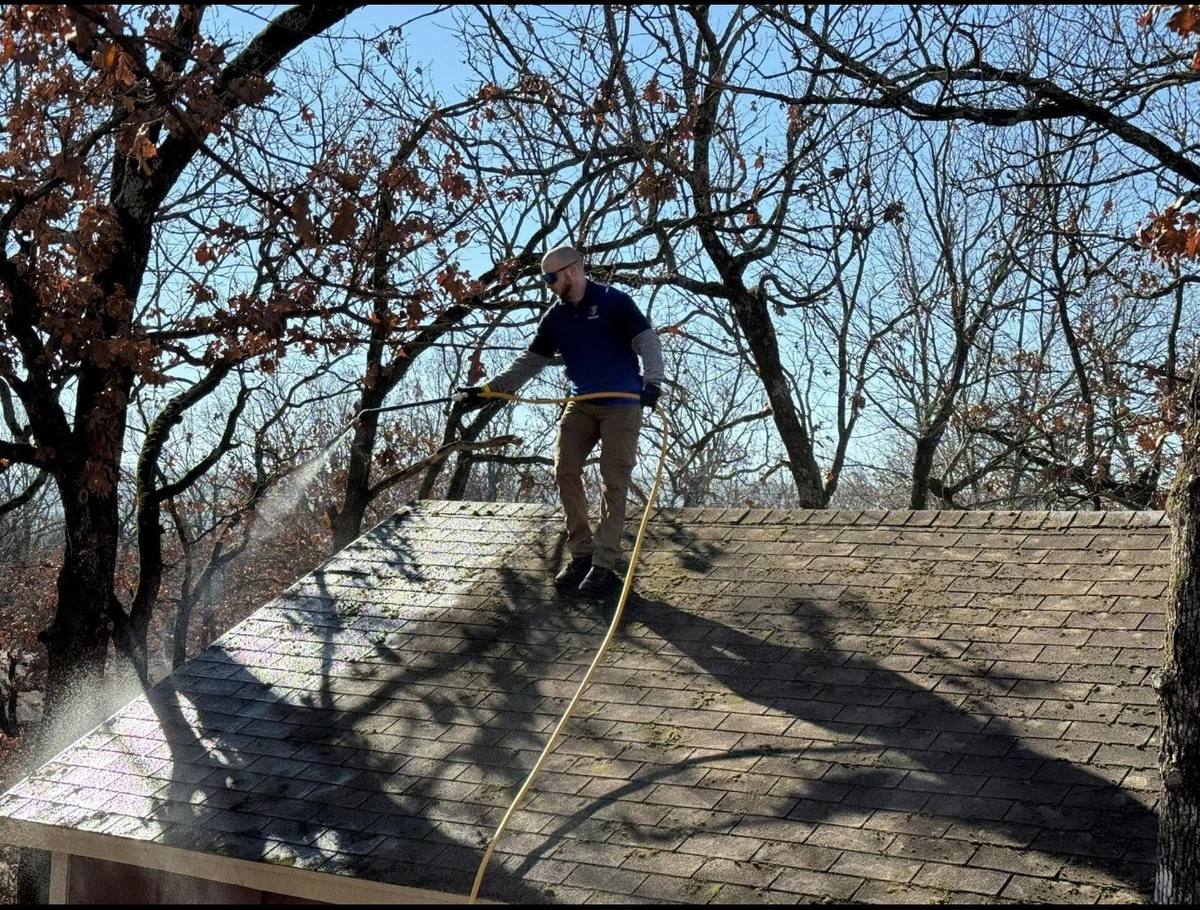
Soft wash roof cleaning is a low-pressure method that uses specialized biodegradable cleaning solutions rather than high-pressure water to remove algae, moss, mildew, and bacteria from your roof. Unlike traditional pressure washing, which can exceed 2,000-3,000 PSI, soft washing typically operates at around 100 PSI or less – roughly the same pressure as a typical garden hose.
The cleaning agents do the heavy lifting for your job. They’re applied to the roof surface, allowed to soak in for a period, and then gently rinsed away. The result is a thoroughly cleaned roof without any risk of damaged shingles, cracked tiles, or voided warranties.
For homeowners seeking roof cleaning services in Oklahoma City, understanding this distinction is critical. The wrong cleaning method can turn a cosmetic issue into a costly roofing repair.
Why Oklahoma City Roofs Get Dirty So Fast
Oklahoma’s climate is tough on roofs. Here’s what’s working against your shingles:
Gloeocapsa Magma (Black Algae Streaks): Those dark black streaks running down your roof aren’t dirt – they’re a type of cyanobacteria called Gloeocapsa magma. It feeds on the limestone filler in asphalt shingles and thrives in Oklahoma’s humid summers. Once it takes hold, it spreads rapidly along the north-facing, shaded sides of your roof.
Moss and Lichen Growth: Oklahoma’s spring rains, followed by warm temperatures, create ideal conditions for moss and lichen growth. These organisms root into shingle surfaces, lifting them over time and creating entry points for water damage.
Oklahoma Red Dirt and Debris: OKC homeowners know red dirt gets everywhere, including your roof. Combined with pollen, leaves from nearby trees, and debris from Oklahoma’s frequent storms, roofs accumulate layers of organic material that trap moisture and accelerate the growth of algae.
Severe Weather Residue: Oklahoma’s storm season leaves behind more than just fallen branches. Hail impact creates micro-abrasions on shingles that give algae and moss an easy foothold. Wind-driven rain pushes debris into valleys and around flashing, where it sits and decomposes.
Soft Wash vs. Pressure Washing: Why Pressure Washing Your Roof Is Risky
Many homeowners initially look for roof pressure washing, unaware of the risks involved. Here’s why experienced roof cleaning professionals in Oklahoma City recommend soft washing over pressure washing:
Shingle Damage: High-pressure water strips away the protective granules on asphalt shingles. Those granules aren’t cosmetic; they protect your roof from UV radiation and help it shed water. Once they’re gone, shingle deterioration accelerates dramatically.
Warranty Issues: Most major shingle manufacturers, including GAF, Owens Corning, and CertainTeed, explicitly warn against pressure washing in their warranty terms. Using high pressure on your roof could void your warranty entirely. Soft washing, on the other hand, is the cleaning method recommended by ARMA (Asphalt Roofing Manufacturers Association).
Water Intrusion: Pressure washing can force water underneath shingles and into the underlayment. This trapped moisture leads to rot, mold, and structural damage that you might not notice until it becomes a serious problem.
Tile and Flashing Damage: For homes in Oklahoma City with tile or metal roofing, pressure washing can crack tiles, loosen flashing, and damage seals around vents and skylights.
The bottom line: soft wash roof cleaning delivers better results with zero risk to your roofing materials.
What Does Roof Cleaning Cost in Oklahoma City?
One of the most common questions from OKC homeowners is how much roof cleaning costs locally. Here’s what Oklahoma City homeowners should expect in 2026:
- Standard Single-Story Home (1,500-2,000 sq ft roof): $250 to $450
- Two-Story Home (2,000-3,000 sq ft roof): $400 to $700
- Large or Complex Roof (3,000+ sq ft, steep pitch, multiple levels): $600 to $1,000+
These prices reflect roof cleaning pricing in the Oklahoma City metro, including Edmond, Norman, Moore, Mustang, Piedmont, Deer Creek, Yukon, and most other metro areas. Factors that affect pricing include:
- Roof size and pitch (steeper roofs require additional safety equipment)
- Level of contamination (heavy algae or moss buildup may need multiple treatments)
- Roof material (tile and metal may require different solutions)
- Accessibility (landscaping, fencing, or obstacles around the home)
Most roof cleaning services in OKC offer free estimates, so it’s worth getting a quote specific to your home.
Compared to the cost of a full roof replacement, which averages $8,000 to $15,000 in Oklahoma, regular roof cleaning is one of the best investments you can make in your home’s longevity and curb appeal.
How Often Should You Clean Your Roof in Oklahoma?
For most homes, Oklahoma City roof cleaning professionals recommend every 2 to 3 years. However, several factors might mean your roof needs attention sooner:
Heavy tree coverage: Homes shaded by trees collect more organic debris and moisture, creating faster algae growth. Annual cleaning may be necessary.
North-facing roof sections: These get less direct sunlight and stay damp longer, making them prime territory for algae and moss.
Previous algae issues: Once Gloeocapsa magma establishes on your roof, it tends to return faster. Preventive treatments can extend the time between cleanings.
After major storms: Oklahoma’s tornado and hail season can deposit debris and damage shingles. A post-storm roof cleaning helps prevent long-term damage from trapped moisture and organic buildup.
5 Signs Your OKC Roof Needs Professional Cleaning
Not sure if your roof needs cleaning yet? Here are the telltale signs that OKC homeowners should act on:
- Black or dark streaks running vertically down your roof – this is almost certainly Gloeocapsa magma algae.
- Green patches or fuzzy growth, especially in shaded areas – moss or lichen has taken root.
- Your roof looks noticeably darker or discolored compared to your neighbors’ – accumulated grime is absorbing heat and aging your shingles faster.
- Granules collecting in your gutters – while some granule loss is normal on aging roofs, excessive loss can indicate biological growth is loosening them.
- Your energy bills are climbing – a dirty roof absorbs more heat. Clean roofs reflect sunlight better, which can reduce cooling costs during Oklahoma’s brutal summers.
The Soft Wash Roof Cleaning Process
When you hire a roof cleaning professional in Oklahoma City, here’s what the soft wash process typically looks like:
Step 1 – Inspection: The crew inspects your roof for damage, identifies the type of contamination (algae, moss, lichen, or general grime), and checks for any areas that need special attention.
Step 2 – Property Protection: Plants, outdoor furniture, and landscaping around your home are pre-wetted and covered to protect them from the cleaning solution.
Step 3 – Solution Application: A custom-blended, biodegradable cleaning solution is applied to the entire roof surface using low-pressure spray equipment. The solution is designed to kill algae, moss, and bacteria at the root level.
Step 4 – Dwell Time: The solution sits on the roof for 15 to 30 minutes, allowing it to fully penetrate and break down biological growth. This is where the real cleaning happens – no scrubbing or blasting required.
Step 5 – Gentle Rinse: The roof is rinsed with low-pressure water, washing away all dead organisms, dirt, and cleaning solution.
Step 6 – Final Inspection: The crew does a walk-around to ensure complete coverage and checks that your property was protected throughout the process.
Most roof cleaning jobs in Oklahoma City take 2 to 4 hours, depending on roof size, and results are visible immediately.
Choosing a Roof Cleaning Company in Oklahoma City
When searching for a roof cleaning or roof washing service in OKC, here’s what to look for:
Soft-wash method: Ensure they use low-pressure soft washing, not high-pressure cleaning. Ask about their PSI range.
Insurance and licensing: Roof work carries liability. Your provider should carry general liability insurance and workers’ compensation.
Biodegradable solutions: The cleaning agents should be EPA-compliant and safe for your landscaping, pets, and the Oklahoma environment.
Local experience: Oklahoma roofs face specific challenges. A company familiar with OKC’s climate, red dirt, storm damage, and local roofing materials will deliver better results than a generic national franchise.
Reviews and before-and-after photos: Look for verified reviews from Oklahoma City homeowners and ask to see photos of previous local work.
Protect Your Investment
Your roof is one of the most expensive components of your home. In Oklahoma City’s climate, regular soft wash roof cleaning isn’t just about curb appeal – it’s about protecting a $10,000+ investment from biological damage that accelerates aging and leads to premature replacement.
Whether you’re dealing with stubborn black algae streaks, creeping moss growth, or just want your Oklahoma City home looking its best, professional soft wash roof cleaning delivers dramatic results safely and affordably.
Ready to see the difference? Contact KJ Power Washing today for a free estimate on your Oklahoma City roof cleaning project.
Frequently Asked Questions
Yes. Soft washing is safe for asphalt shingles, tile, metal, slate, and cedar shake roofs. The low pressure and biodegradable solutions won’t damage any standard roofing material. It’s actually the only cleaning method recommended by major shingle manufacturers.
In the Oklahoma City area, results typically last 2 to 3 years. Homes with heavy tree coverage or north-facing exposure may see regrowth sooner. Some roof cleaning companies offer preventive treatment plans that extend results even further.
Professional roof cleaning companies pre-wet and protect all landscaping before applying cleaning solutions. The biodegradable products used in soft washing break down quickly and are designed to be safe for plants, pets, and the surrounding environment.
We strongly recommend against DIY roof pressure washing. Beyond the risk of shingle damage, working on a wet, sloped roof is extremely dangerous. Professional roof cleaners carry proper safety equipment, insurance, and the training to work safely at height. The cost of professional cleaning is far less than a trip to the ER or a new roof.
Absolutely. Clean roofs significantly boost curb appeal, which directly impacts home value and sale speed. Real estate professionals in Oklahoma City consistently cite roof appearance as a top factor in first impressions. A $300 – $500 roof cleaning can add thousands of dollars in perceived value.
Spring (March through May) and fall (September through November) are ideal for roof cleaning in OKC. The moderate temperatures allow cleaning solutions to work effectively without evaporating too quickly. Avoid scheduling during Oklahoma’s peak summer heat or freezing winter temperatures.